
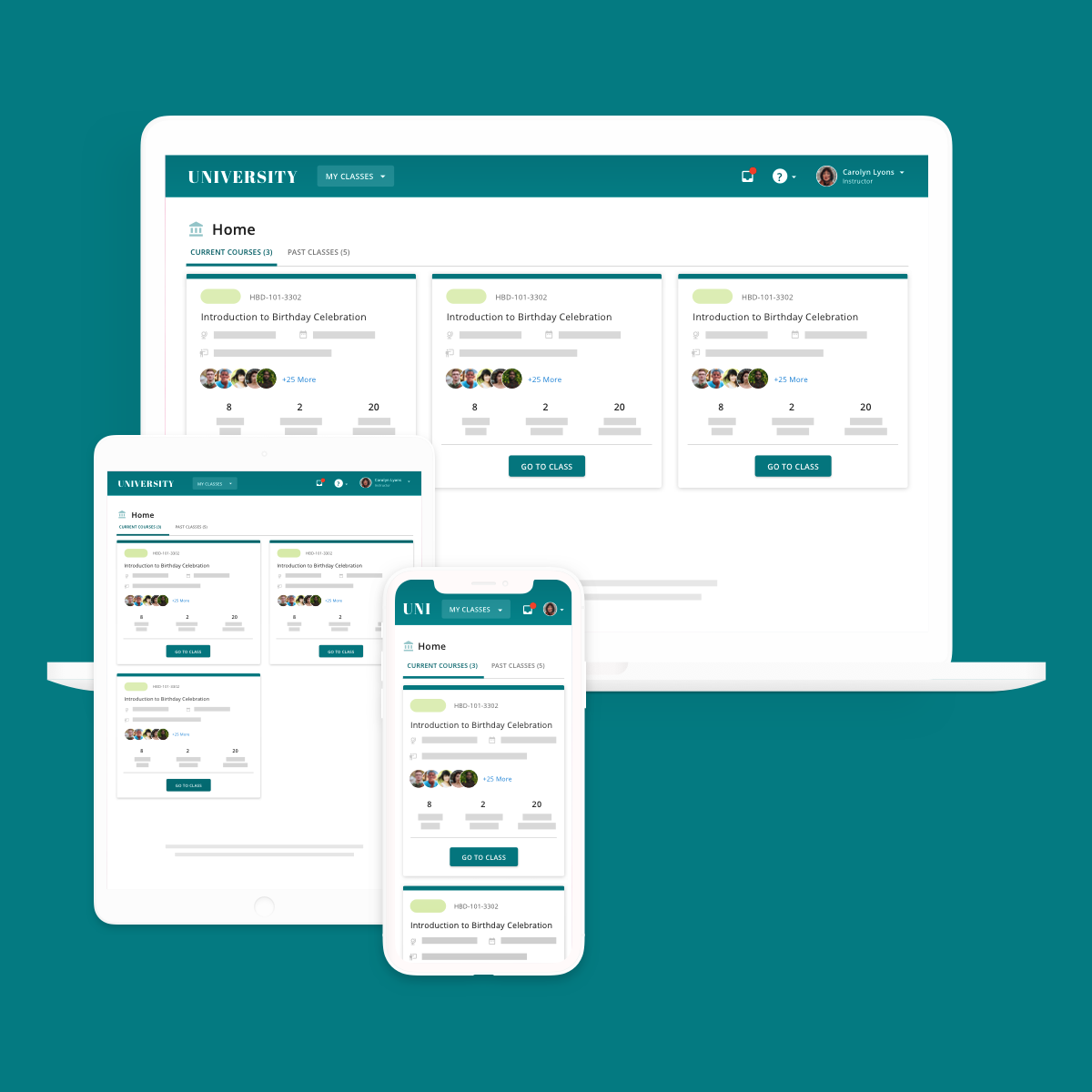
Learning Management System
Problem
The current system was outdated and slow. The architecture of the platform caused many headaches and calls to technical support for both faculty members and students on a day-to-day basis.
Solution
Following Material Design guidelines and referencing extensive user research, an entirely new system and platform architecture was designed for the client.
EXECUTION
Conducted user research and user testing with faculty members from the client university to understand their workflows and pain points with the current system
Worked on features throughout the entire design process from requirement gathering, information architecture, and user flows to wires, visuals, and prototyping
Lead a small team of designers through 215 shipped features and 20 successful releases resulting in 175,000+ active users on the new platform
Class Modifications Feature showcase
Since this is a large system with over 800 screens designed between myself and another designer, I want to showcase a couple specific features - class modifications and grading workflow. The class modifications feature was easily the most difficult to design and implement.
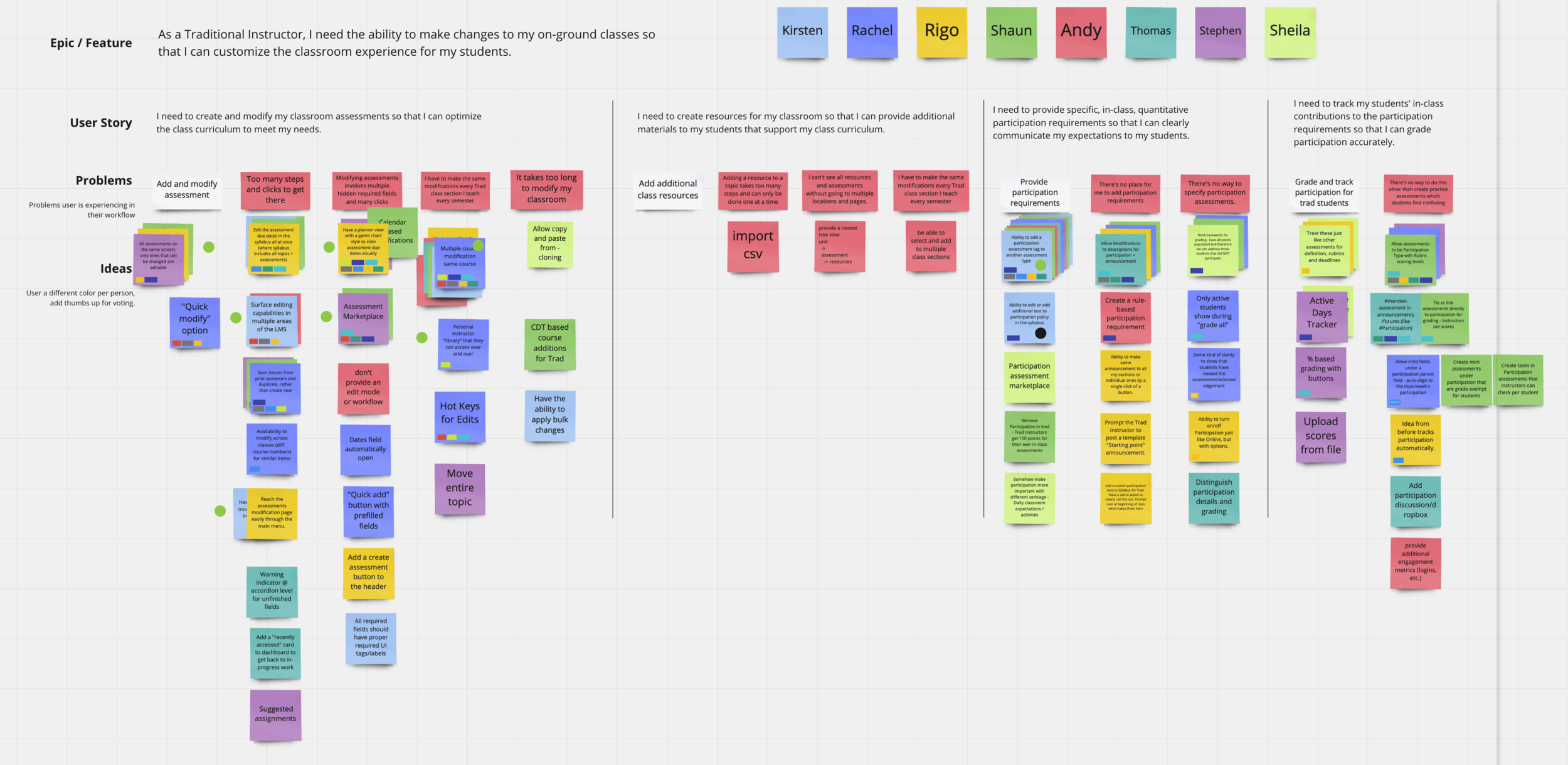
An ideation session was completed with product owners, designers, developers, and faculty users to get a wide range of perspectives on the feature.
User Needs
As an instructor, I need to create and modify my classroom assessments so that I can optimize the class curriculum to meet my needs.
As an instructor, I need to create resources for my classroom so that I can provide additional materials to my students that support my class curriculum.
As an instructor, I need to provide specific, in-class, quantitative participation requirements so that I can clearly communicate my expectations to my students.
As an instructor, I need to track my students’ in-class contributions to the participation requirements so that I can grade participation accurately.
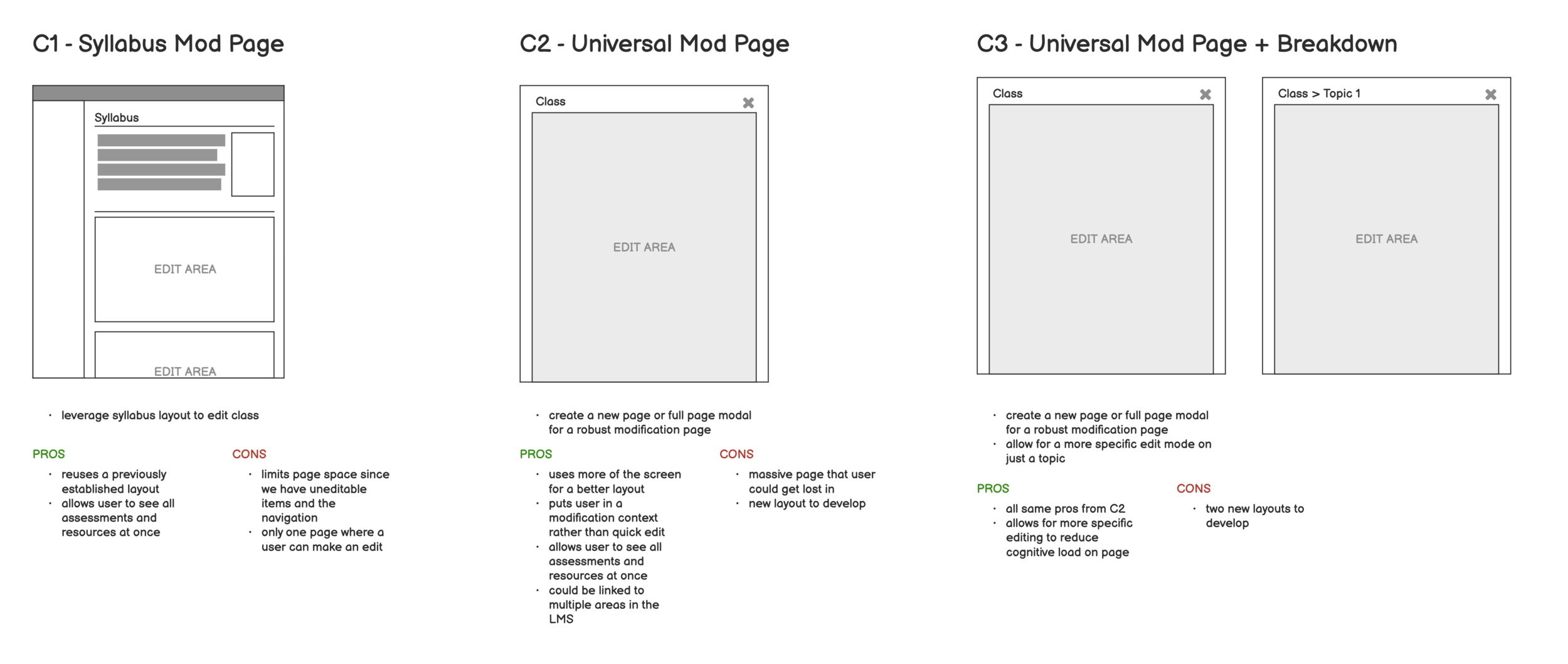
Initial High level concepts were created to show the product team the pros and cons of different page layouts and workflows.
Pain Points
Modifying one class takes too much time out of an instructor’s day
Instructors cannot get a clear overview of their classroom modifications without going to multiple locations and pages
Previous system UI was confusing and difficult to learn
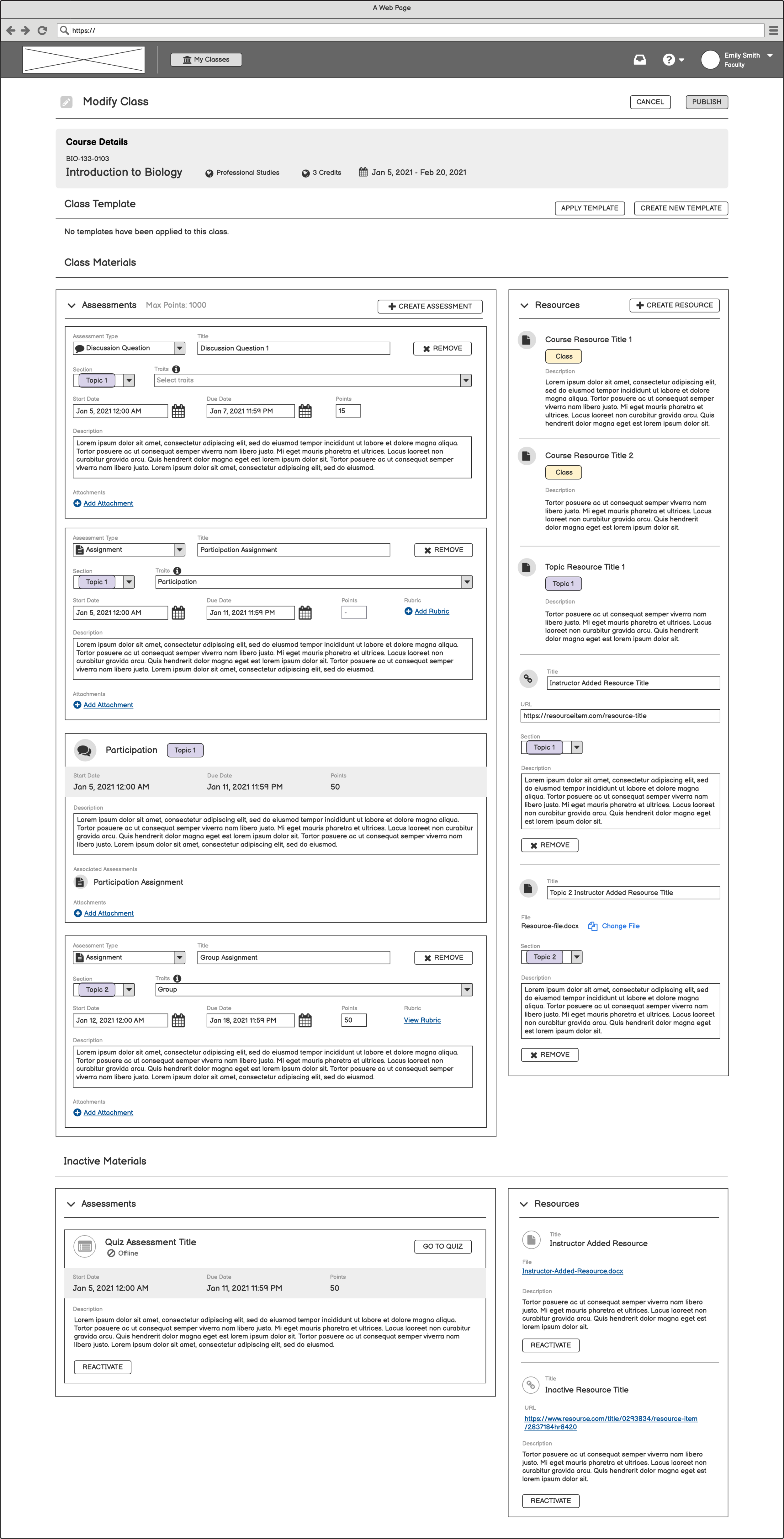
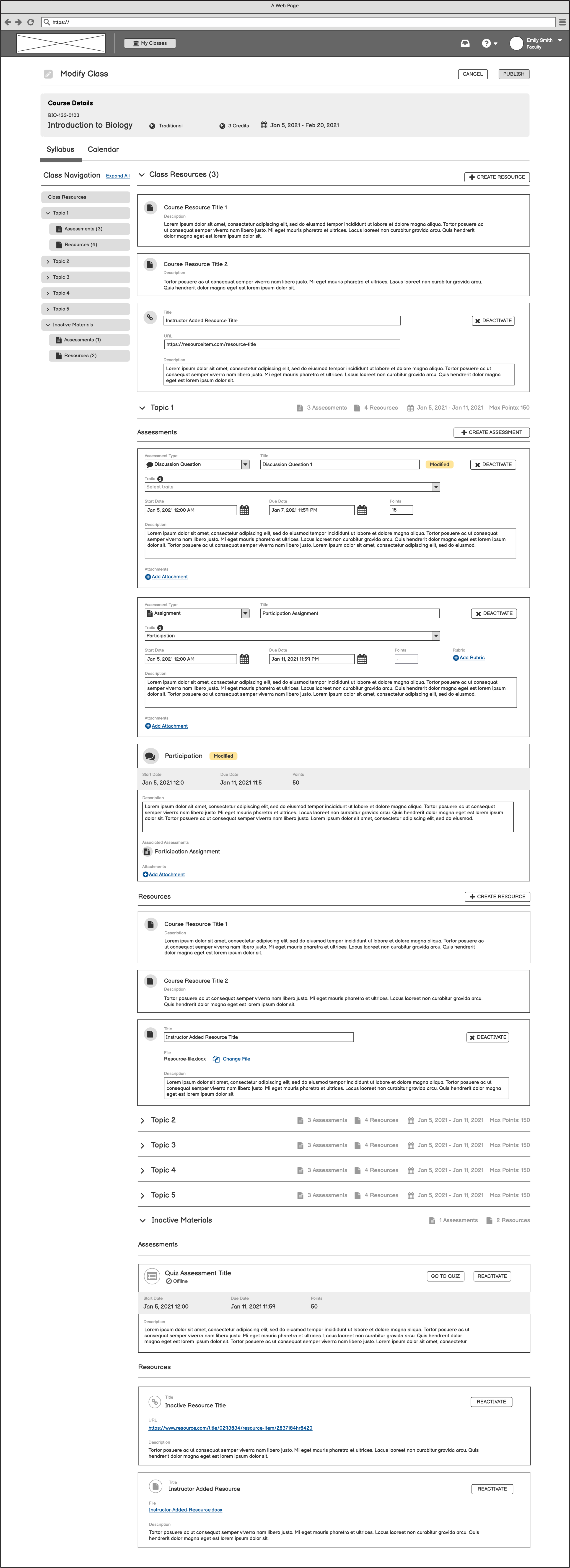
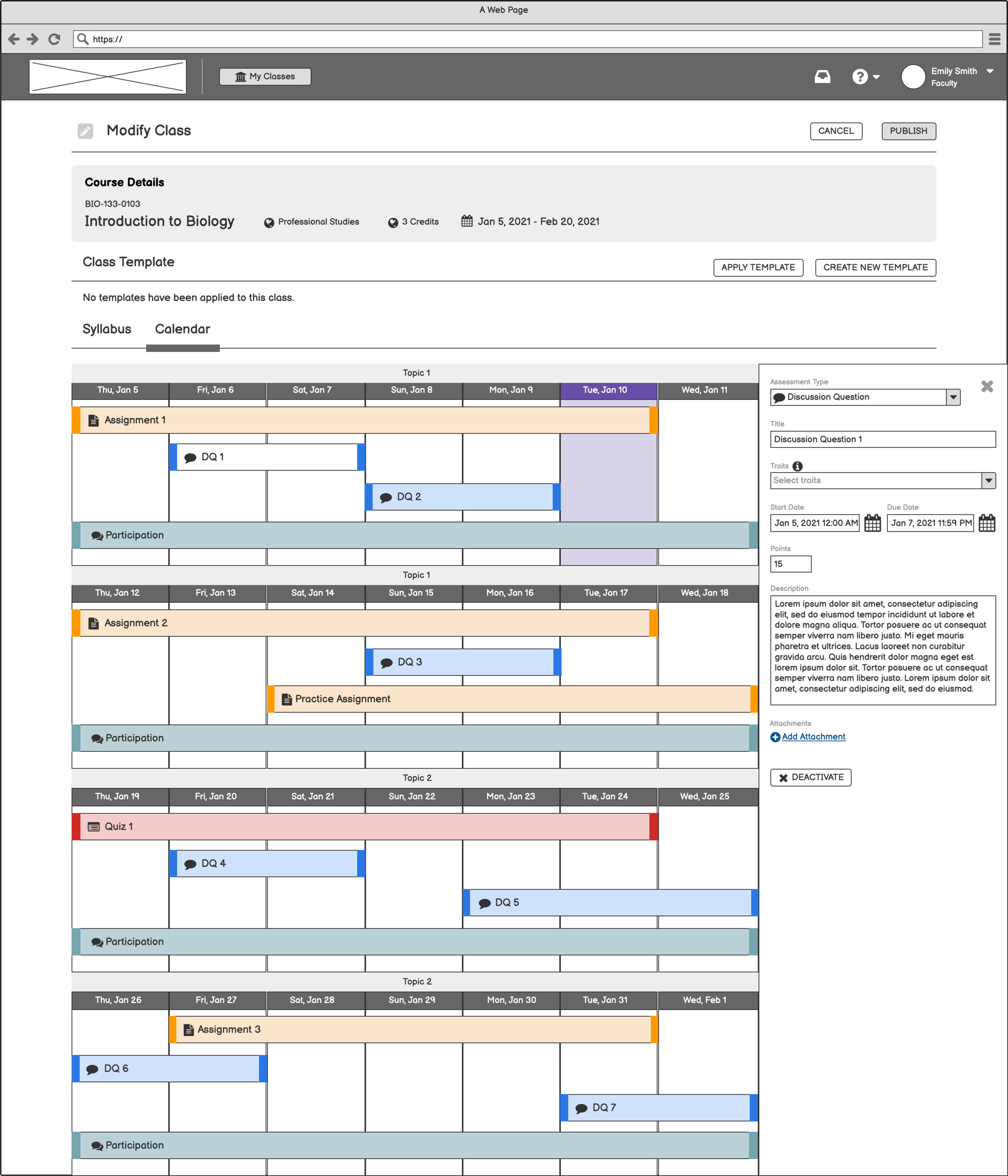
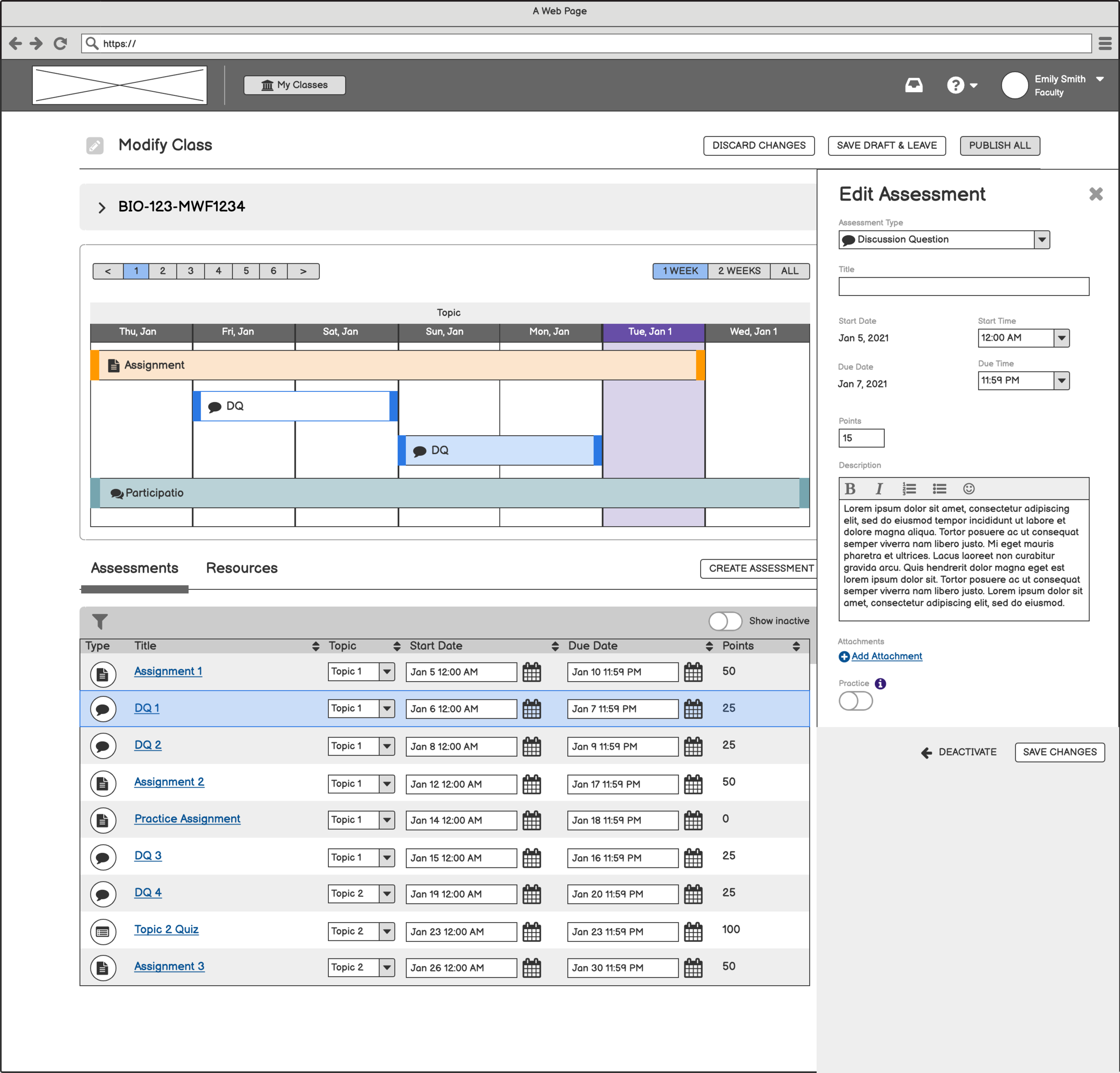
For detailed viewing of wires, please visit the Figma file.
CHallenges
Instructors always want to all details of classroom materials at any given point in their workflows
Design needed to be responsive to accommodate different devices used by instructors
Technical limitations were introduced after the design had been finalized resulting in a rush to rework aspects of the finalized concept to be able to ship the feature by full launch
Time constraints paired with technical limitations meant some parts of the design had to be pushed back for future releases
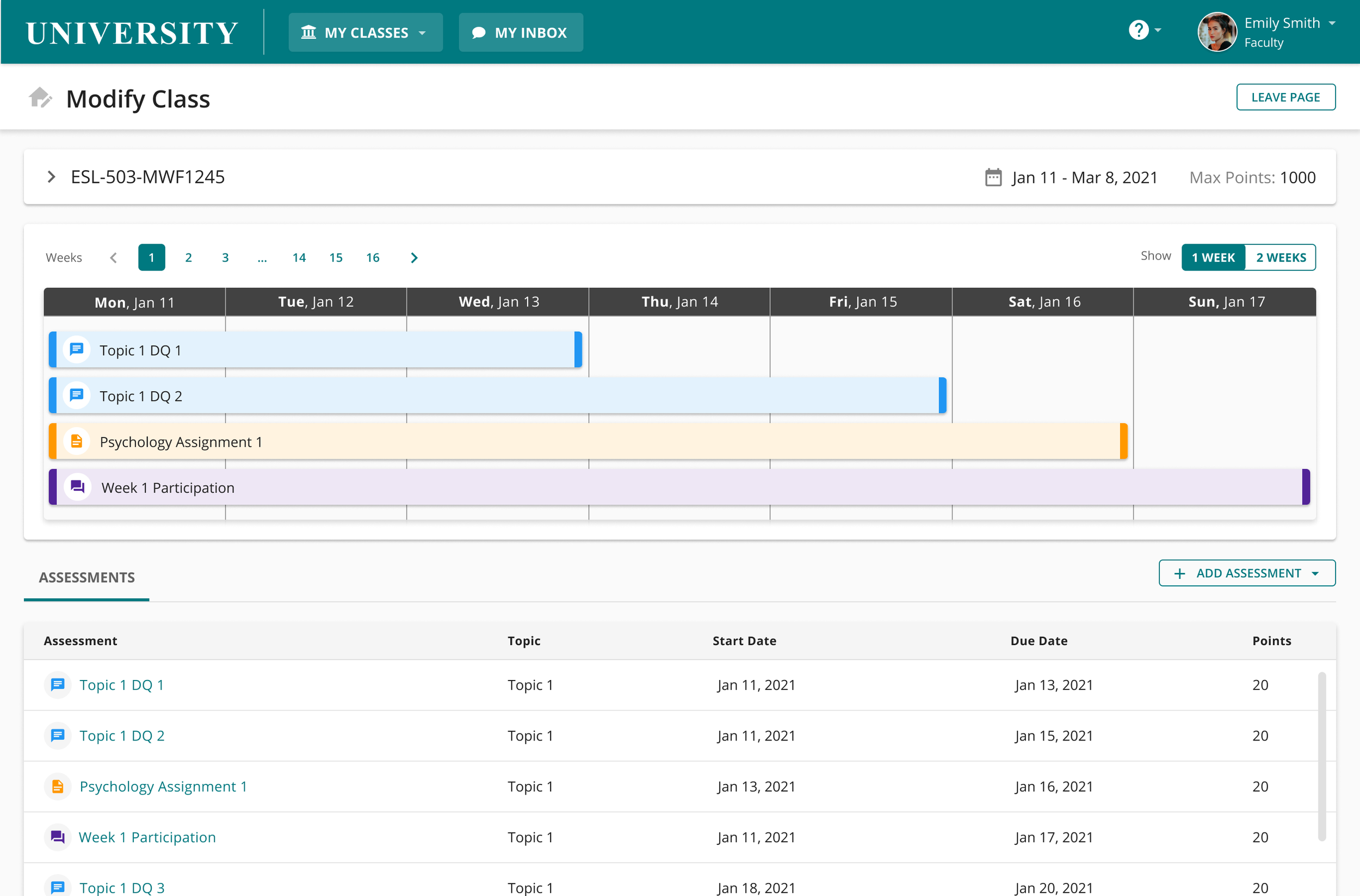
Several features of the finalized concept had to be pushed back to future releases so the team could get an mvp version out before launch.
Initial Feedback After Full release
“I am able to modify a private instruction class...in about 10 minutes for the entire class, rather than what was about 30 minutes per class.”
“It is truly such an organized, clear, up-to-date, user friendly [application] and I cannot think of more words. It is just such a professional platform”
Conclusion
At the start of the design process, we knew we wanted to focus on creating the most efficient workflow. We succeed in that endeavor but what was lost was the learnability of class modifications. While most of the feedback we’ve received from instructors has been positive, there are outliers who asked for more instructions in the workflow. There are other issues that will affect the longevity of the feature because we weren’t able to include certain items before the full launch to the client university’s on-ground campus. Designing class modifications and working closely with the development team to get an MVP version out on time has shown me the importance of estimating the time to production to ensure we have a viable product to release on time.